Politics

City Council Speaker Adrienne Adams Shows Support and Concern for Mayor Eric Adams’ Gun Violence Plan

City Council Speaker Adrienne Adams put out a statement in support of Mayor Eric Adams’ ‘Gun Violence Plan’, but she also expressed concern over his eagerness to bring back what many believe amounts to stop and frisk, with the plain clothes units being tasked once again with policing the community as a way to bring gun violence down. The problems that New Yorkers of color have faced over the years has been well documented. This opens the door to increased police harassment against hard working New Yorkers and officers spending valuable time writing tickets, while others are committing actual crimes. The Mayor says this will not happen under his watch, but he is no longer the officer who is on the frontline, there are other officers who are out there stopping and frisking innocent New Yorkers. Below is Adrienne Adams official statement.

“We appreciate the mayor’s focus on the epidemic of violence our city faces and the need for multiple solutions, as the problem is complex and requires multifaceted approaches. An important way we can support the NYPD in its efforts to improve public safety is by expanding our commitment to complementary public safety work by other stakeholders in every city agency and community partner that can help prevent crime and violence – this plan starts to recognize that reality. We strongly welcome the mayor’s focus on strengthening community-based violence prevention programs, mental health care, and investments in youth employment – and we’re glad these are so central to the plan and conversation, providing a great starting point. The mayor’s advocacy for action on gun control in Washington and efforts to target gun trafficking is also critical.

“Concerns have been raised in communities about the plain clothes unit’s ability to reduce violence, given its past history of initiating undue violence. This proposal – along with others to change city and state criminal justice policies – requires further public dialogue and transparency. Public safety is a critical issue for our city, and the Council looks forward to exploring the details of this plan to ensure our city is enacting the best and most comprehensive range of strategies to prevent violence at the level needed. We, as a legislative body, are focused on contributing solutions to enhance the city’s ability to make every New Yorker safer.”

Subscribe to NYC Politics for Updates

Continue reading

Features

Brooklyn’s Carnegie Kid Confronts Alcoholism Head-On with New Video for “Spirits”

Article Courtesy Jack Carenza / TodaysHipHop.com

Carnegie Kid dropped a powerful new video for his influential song Spirits, one of the more compelling offerings from 2021 album Prince of Kings County. The track itself cuts no corners as Carnegie addresses the pain caused from alcohol abuse fearlessly, and the visuals add new layers to a song that is already complex and intense.

Many of the songs on Prince of Kings County reflect the internal conflict that exists within all people, and the video for “Spirits” certainly embraces this same artistic technique.  Shrouded in darkness, Carnegie raps of his subject matter while seemingly drowning in a bathtub of dark liquor.  Physical embodiments of “spirits”, dark, hooded figures grasp to gain control of his physical body and pull him down with them into the abyss.

The visuals (which were executed flawlessly by SMAC VISUALS) add to the bleak nature of a song which directs a listener’s attention to the grim sides of a drinking problem and does not shy away from the transgression that often accompany a person who is dealing with alcoholism.

The video concludes with a powerful quote from Proverbs 20:1: “Wine is a mocker; strong drink is a brawler.” This quotation attaches more meaning to the song showing the powerlessness of alcoholics to stop abusing liquor, as well as the violence it provokes within.  Carnegie Kid leaves a listener with an understanding that he has experienced, or at the very least closely witnessed the effects of alcoholism and the negative effects it can have on the community.

If you enjoyed the visuals for Spirits, be sure to follow Carnegie Kid on Instagram, and stream Prince of Kings County, which is available on all streaming services. At Today’s Hip Hop, we provide independent artists with the tools, resources, and platform to empower themselves, and monetize their career.  Follow us on Instagram, and feel free to reach out directly if you believe you or an artist you know is ready to take this next step forward.

Continue reading

Health

East New York’s Fusion East Participates in Gov Hochul’s $25Mil Restaurant Resiliency Program To Fight Food Insecurity

photo: Andrew Walcott, Owner Fusion East Restaurant

Governor Kathy Hochul recently announced New York State’s Restaurant Resiliency Program will be delivering 200,000 meals to New Yorkers in need. Restaurants involved in the program are in all regions of New York State and represent the diversity of the state, with many participating restaurants representing minority and women owned businesses.

“No family in the state of New York should go hungry,” Governor Hochul said. “The Restaurant Resiliency Program takes an innovative approach to help New Yorkers facing food insecurity and restaurants struggling during the pandemic. Programs like these showcase the spirit of generosity and collaboration that is crucial to New York’s success.”

Through the program, the Department of Agriculture and Markets has received several hundred applications from restaurants to date, more than one third of which have come from minority and woman owned businesses. East New York’s Fusion East Restaurant, in collaboration with Long Island Cares, is one of 215 restaurants that has been approved to participate in the program. Fusion East has started providing food to pantries in Nassau County and will be adding Brooklyn pantries in the coming weeks.

SUBSCRIBE to East New York News Newsletter

Continue reading

DevelopmentHousingPolitics

Second Group of Private Developers Take Over Additional NYCHA Developments in East New York

by Judith Brown for EastNewYork.com

We recently published the press release from the first group of developers that took over NYCHA developments in East New York. Below is the press release from the second group of developers who are taking over additional NYCHA developments in East New York. You would have to believe that this is just the beginning, with more private developers coming in to take control of more NYCHA developments. Improvements on NYCHA developments are absolutely needed, but NYCHA is the most valuable real estate asset that New York City has when it comes to long term affordability. Giving away the only true affordable housing portfolio to private developers cannot be good for affordability in New York City. You have to ask yourself a question; have you ever met a private developer who cares about anything other than turning the largest profit they can make? Private developers throughout history have not been good partners for communities of color, therefore it would be safe to assume that this move will not change their historical disdain for communities of color.

Press Release from: the Stanley Avenue Preservation (SAP), a joint venture of Dantes Partners, Douglaston Development, L+M Development Partners, and SMJ Development in partnership with the New York City Housing Authority (NYCHA), today announced the closing on $430 million in financing for comprehensive renovations to a 1,922-unit public housing portfolio comprising NYCHA’s Linden and Penn-Wortman houses in East New York, Brooklyn. The partnership is undertaking the project through NYCHA’s Permanent Affordability Commitment Together (PACT) initiative, which utilizes the federal Rental Assistance Demonstration (RAD) program to unlock funding for repairs while ensuring developments remain permanently affordable and that residents retain the same rights that they possess in the standard public housing program. Through PACT, the SAP team will begin work next month on repairs following decades of disinvestment at the properties. The NYC Housing Development Corporation (HDC), Wells Fargo and Citi provided construction financing, and HDC provided permanent loan financing through the FHA risk share program.

“The PACT program continues to be one of the Authority’s best tools for comprehensively improving NYCHA campuses with significant infrastructure repair needs,” said NYCHA Chair & CEO Greg Russ. “The collection of experienced partners that have been assembled to provide large-scale rehabilitation work, robust property management, and much-needed social services for these sites will enable NYCHA to maintain our commitment to creating stronger developments for thousands of additional public housing families.”

“The public-private partnerships represented in this latest round of PACT projects enable the Authority to raise the funds needed to make capital repairs and drive additional community resources to residents, all while maintaining public control of NYCHA buildings with the support of our tenant leadership,” said NYCHA EVP of Real Estate Development Jonathan Gouveia. “Today’s announcement marks a major milestone in our pledge to deliver desperately needed and long overdue repairs for 62,000 apartments in NYCHA’s portfolio.”

“At Dantes Partners our goal is to facilitate and enhance local urban economic development by designing and structuring innovative funding and financing solutions for affordable, workforce, and mixed-income housing and community-based real estate,” said Buwa Binitie, Managing Principal of Dantes Partners. “Through this public-private partnership we can apply those same principals to make a significant impact in the enhancement of NYCHA communities.  This has been a collaborative effort with the residents, and we look forward to fostering a safe, thriving, and beautiful place for them to continue to live.”

“As a former resident of the Linden Houses during a portion of my childhood, I am humbled and honored by the opportunity to enhance the property for current residents, and to continue our firm’s commitment to high-quality affordable housing in New York,” said Jeffrey E. Levine, Founder & Chairman of Douglaston Development. “Douglaston Development is excited to partner with L+M, Dantes, and SMJ on the rehabilitation of the Linden and Penn-Wortman Houses.”

“Our core mission at L+M Development Partners is to work together to build stronger communities and with this project we’re excited to redevelop public housing for East New York residents,” said Ayanna Oliver-Taylor, Managing Director of Development at L+M Development Partners. “As we continue to rehabilitate and manage NYCHA properties through the PACT initiative, we have truly seen how these projects have improved the lives of residents. Today’s closing marks a significant milestone of this collaborative effort to revitalize the East New York community.”

“SMJ is excited to play a part in the rehabilitation of Linden and Penn Wortman Houses along with L&M Development Partners, Douglaston Development, Dantes Partners, and NYCHA,” said  Juan Barahona, Principal, SMJ Development. “Our commitment to the preservation of affordable housing is unflappable regardless of how difficult the work may be.  We treat our residents’ homes with the same care and respect as our own and we look forward to collaborating with residents to enhance their experience.”

“HDC is proud to provide critical bond financing to help ensure comprehensive repairs, guaranteed affordability, and tenant protections for the residents of Linden and Penn-Wortman,” said HDC President Eric Enderlin.  “Thanks to all our partners for their ongoing efforts to improve the quality of life of NYCHA residents through the PACT program.”

“Citi is proud to work with Wells Fargo and the New York City Housing Development Corporation in providing the financing necessary to transform and preserve Penn-Wortman Houses,” said Barry Krinsky, National Production Manager, Citi Community Capital. “This marks the continuation of our work with NYCHA dating back to 2010.”

Built in the 1950s (Linden) and 1970s (Penn-Wortman), the properties are in dire need of repairs to the interiors, exteriors and mechanical systems. Starting in January, SAP, led by Levine Builders and L+M Builders, will begin work on an array of repairs, with Curtis + Ginsberg Architects LLP serving as the project’s architect.

Improvements will include: 

  • Apartment interior upgrades, including new bathrooms, kitchens with new stainless steel energy star appliances, LED lighting, painting and flooring

  • In-unit Wi-Fi access for all residents

  • Enhanced community amenities including enlarged lobbies with parcel lockers, recycling rooms, modernized laundry facilities, a resident community center, Social Services offices and Tenant Association offices

  • Additional priorities identified by residents, including improved waste management, pest management, security, and interior and site lighting

  • Exterior site work, streamlined and amenity rich landscaping that will include new fencing, seating, walking paths, renovated playgrounds, and recreational facility upgrades

  • Façade and building envelope upgrades, including window replacement and new highly insulated roofs at both developments, façade over-cladding with Exterior Insulation Finish Systems (EIFS) across all buildings at Linden Houses

  • Security upgrades, including replacement of opaque walls with window-walls at corridors and lobbies, key-fob access control and improved lighting

  • Building system upgrades to prevent system failures, such as new electrical apartment panels, new water piping, and elevator modernization

  • Heating and hot water plant upgrade/repairs at Linden, and installation of electrical hot water heaters at Penn Wortman
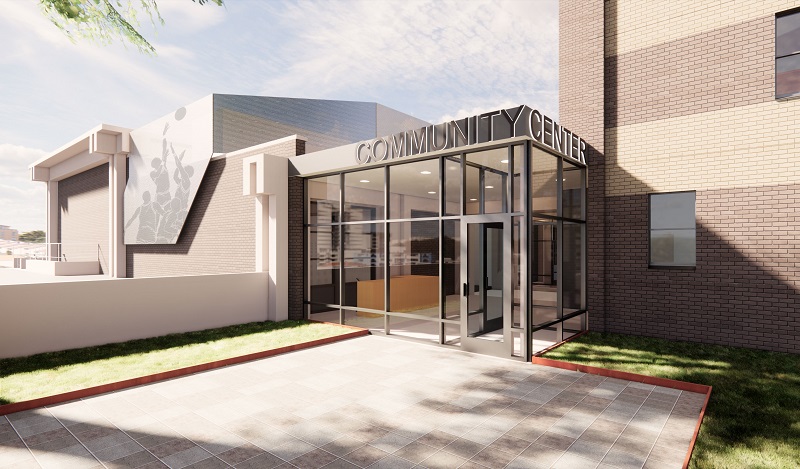
Rendering: Penn-Wortman Community Center Entrance
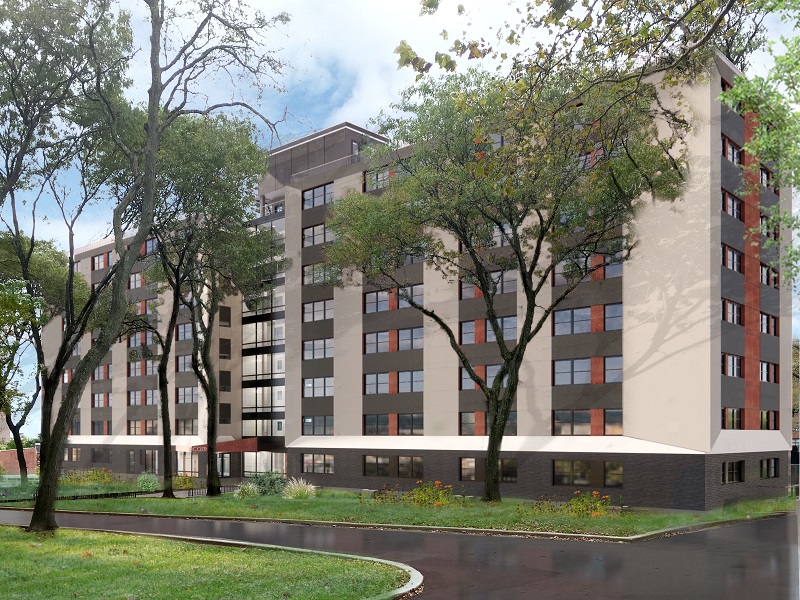
Rendering: 1940 Linden Houses Side View

SAP will serve as the new on-site property manager, which will be led by C+C Apartment Management.

Resident engagement is at the core of SAP’s approach. Over the past year, the SAP team has held virtual town hall meetings, provided on-site information for tenants to explain the transition process forPACT projects, and engaged residents around general feedback, questions, and concerns. Residents are signing new leases that were reviewed by the Legal Aid Society and cannot be changed without NYCHA’s approval, with rents capped at 30 percent of household income including utilities, in accordance with federal law.

At the same time, SAP will introduce a host of on-site social services led by venerable social service provider University Settlement, in addition to existing services from CAMBA and Millennium Club both located at the Penn-Wortman community center. University Settlement operates multiple community centers throughout the city and will offer residents services that include early childhood, youth, mental health, adult literacy, senior services, financial services, and family services programming.

L+M, along with its partners, completed renovations through PACT at Baychester and Murphy Houses in the Bronx earlier this year, where residents remained in their homes and now enjoy renovations similar to those planned for Linden and Penn-Wortman. The renovations were similarly undertaken by L+M Builders, and the properties are also managed by C+C.

Recently, longtime Baychester Houses Resident Association President Sandra Gross told The New York Times that when she first heard that her complex had been selected for the PACT program, she was worried NYCHA would “privatize” it. She and her residents feared rising rents and displacement. But now that renovations were complete, with all residents in their refurbished homes on a sparkling new campus, their rent structure intact and not a single tenant evicted, she told The Times that what happened at Baychester was “a miracle and a blessing.”

RELATED ARTICLES

Private Developers Officially Take Over NYCHA Developments In East New York

The City’s Three NYCHA Plans That Will Privatize Public Housing

The Privatization Of NYCHA Which Will Displace Thousands Of Tenants: How We Can ‘Halt The Blueprint’

Op-Ed: East New York In Crisis As City Officials Sell NYCHA Housing To Questionable Private Developers Which May Lead To High Speed Gentrification And Displacement Of Residents

Community Board 5 Forced To Have Emergency Town Hall After Being Exposed For Not Informing Their Constituents That NYCHA Housing Is Being Sold To Private Developers

Continue reading

FeaturesHealth

You Can Vote on the Option to Have $40,000 for Mental Health Support for High School Students in Canarsie

New York City is investing $40,000 each, into various neighborhoods across the city, including Canarsie, Flatlands and East New York.  Residents and students have the opportunity to vote on how the funds are spent.

There is an option for $40,000 to be spent to support high schools in the Canarsie neighborhood, within the 11236 zip code. If this is an option that you support then you can vote on this option. The deadline is January 17, 2022. You can Vote Online.

The $40,000 will be used in this option to coordinate with all the local Canarsie NYC high schools to promote mental health and wellbeing specifically among youth ages 11 to 23 years old and their families. There will be events held in partnership with each of the High School Principals in the Canarsie community, to provide mental health therapy, healthy eating, healthy cooking, yoga and massage activities, serving the 11236 zip code.

The goal is to create increased mental health access by working with registered mental health therapists, providing access to correct information about mental health stigma. Mental health issues among youth are increasing, with increased usage of social media, anxieties about COVID, social isolation and depression resulting from all sorts of societal ills.  VOTE Here to support this option.

ABOUT THE PROGRAM

The City of New York is investing $1.3M to support recovery in the 33 neighborhoods hardest hit by COVID-19.  This citywide neighborhood coalition initiative is being led by the NYC Taskforce for Racial Inclusion and Equity (TRIE), Civic Engagement Commission (CEC) and Young Men’s Initiative. Residents living, working, or going to school in one of these communities will get to decide how to spend $40,000 of public funds in their neighborhood. These investments will support our communities and contribute to a more fair recovery. The ballot items include projects focused on priority areas identified by residents in each community, including mental health, reducing gun violence, youth programming, and hunger.

If you want to speak to someone about the program, as it relates to the Canarsie, Flatlands or Coney Island area you can contact Southern Community Development Corp at (212)470-6598.

Continue reading

Features

Brooklyn’s Kota the Friend Helps Us To Put Fear in the Backseat With His New Single

Fear is a feeling that affects everyone throughout their life. Brooklyn producer and hip hop artist, Kota the Friend addresses fear in his newly released ‘Dear Fear‘, which is a single from his upcoming Lyrics to Go Volume 3 album that will be released Friday January 14, 2022 at 12 midnight. Dear Fear is produced by eMadonna and Mike Baretz. Kota’s lyrics are always on point, but his visual in this one goes beyond his regular Lyrics to Go features. He created the visual to look like a scene out of a movie. In the video he writes a letter to Fear, hence the title of the song, ‘Dear Fear’. One fan on Kota’s YouTube page summed up the video perfectly when he said “you don’t just hear the song but you feel it”.

Kota’s team informed us that they will be announcing their 2022 Flight Night Festival series within the next week. The festival will make stops in LA, NYC, Chicago, Colorado, Pennsylvania, London and Paris.

The video is below. (some explicit lyrics)

Listen on Spotify

Listen on Apple Music

Other Popular Kota the Friend Videos

Continue reading

HousingPolitics

Private Developers Officially Take Over NYCHA Developments in East New York

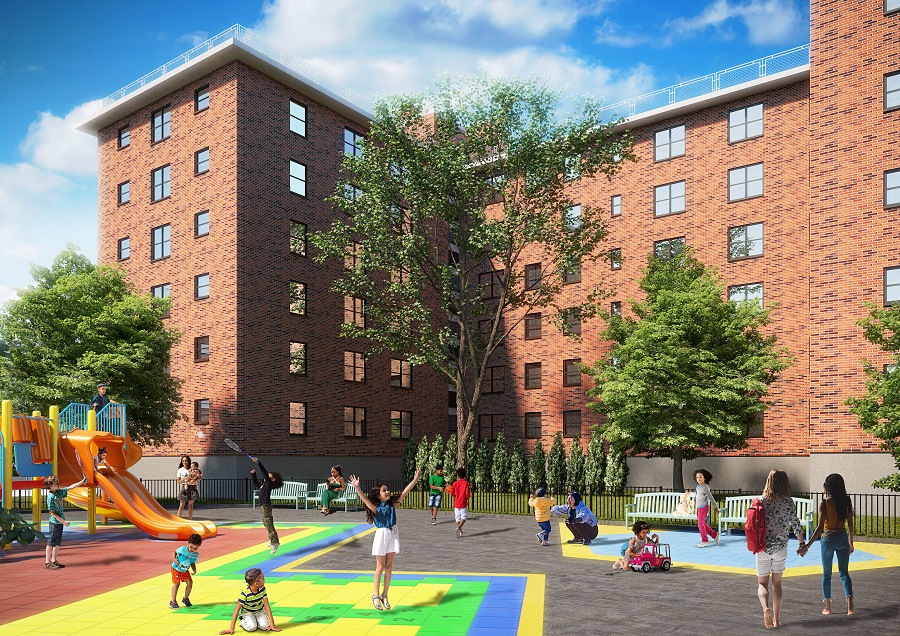
It’s official. Private Developers have taken control of a few NYCHA developments in East New York. Below is the press release from one of the groups of developers, explaining the joint venture. The impact on the community, positive or negative, remains to be seen, but the deed is done. See the renderings below, showing the expectations of what the development will bring, in terms of community improvements.

Boulevard Together Developer LLC (Boulevard Together), a joint venture of The Hudson Companies, Property Resources Corporation and Duvernay + Brooks in partnership with the New York City Housing Authority (NYCHA), today announced the closing of $600 million in financing for comprehensive renovations to a 1,673-unit public housing portfolio comprising three separate NYCHA developments including Boulevard Houses, Fiorentino Plaza and Belmont-Sutter Area in East New York, Brooklyn. The partnership is undertaking the project through NYCHA’s Permanent Affordability Commitment Together (PACT) initiative, which utilizes the federal Rental Assistance Demonstration (RAD) program to unlock funding for repairs while ensuring developments in the program remain permanently affordable and that residents retain the same rights that they possess in the standard public housing program. 

Through PACT, the Boulevard Together team will oversee critical infrastructure and capital repair needs in 29 NYCHA buildings following decades of disinvestment at the properties. Boulevard Houses will finance the project through a construction loan provided by the New York City Housing Development Corporation and JP Morgan Chase. In addition to traditional funding, Boulevard Houses and Fiorentino Plaza are qualified to generate historic tax credits and Chase Community Development Banking will invest up to $140 million of Federal and State Historic tax credit equity into the project.

“Today’s announcement is an important step towards bringing comprehensive repairs and social services to more than 1,600 NYCHA households,” said HDC President Eric Enderlin. “HDC is proud to provide critical financing to ensure our public housing residents benefit from lasting affordability and tenant protections through PACT. Congratulations to all our partners on reaching this pivotal stage in the preservation of the Boulevard housing portfolio.”

“This is about the residents first and foremost. We have engaged in frequent and productive conversations with the residents and their leadership associations and are thrilled to be providing residents of the Boulevard Houses, Fiorentino Plaza and Belmont-Sutter Area with fully-renovated apartments with critical upgrades to their buildings,” said Aaron Koffman, Managing Principal of The Hudson Companies. “This transformational project will also provide local workforce and educational opportunities while maintaining resident protections and permanent affordability for generations to come. We look forward to working in close coordination with Property Resources Corporation, Duvernay + Brooks, NYCHA and HDC to bring this vision to reality.”

“D+B is deeply committed to this partnership with NYCHA and the Boulevard Together team to provide critical improvements to residents’ homes and to permanently preserve this vital affordable housing resource for its residents and the East New York community,” said Duvernay + Brooks Managing Director Gale Kaufman.

“Property Resources Corporation is honored to be a part of the team chosen by NYCHA to revitalize these communities,” said Matt Linde, Principal at Property Resources Corporation. “With the closing of this transaction, Boulevard Houses, Fiorentino Plaza, and Belmont Sutter Area will receive much needed capital repairs that will dramatically upgrade each resident’s home and enhance the public spaces at each property. PRC and the Boulevard Together team remain committed to ensuring that these apartments remain permanently affordable through NYCHA’s PACT program.” 

Built in the 1950s (Boulevard Houses), 1970s (Fiorentino Plaza) and 1980s (Belmont-Sutter Area) the complexes are in need of repairs to interiors, exteriors, storm drainage, structural upgrades and improved security systems. Starting next month, Boulevard Together will begin work on an array of repairs, with Peter Clements Architects serving as the project’s architect.

Improvements will include:

  • Apartment interior upgrades, including new bathrooms, kitchens, lighting, painting, and flooring

  • Enhanced community amenities including laundry, and new storage spaces

  • Exterior site work, new signage, augmented landscape with new gazebos, seating, walkways, renovated playgrounds, outdoor gymnasiums, open air reading rooms, community gardens and areas for outdoor exhibitions

  • Addressing priorities identified by residents in recent tenant engagement meetings: waste management, new units with ADA access, security, and improved interior and site lighting

  • 100% window replacement

  • New energy star appliances

  • Façade and site improvements including entrances, parapet walls, window and roof replacements, building system upgrades to prevent system failures, and elevator modernization

  • Boulevard Together Management LLC will serve as the new on-site property manager led by Lisa Management and PRC Management

Over the past year, the Boulevard Together team has held regular virtual town hall meetings and provided monthly newsletters with information for tenants to explain the RAD conversion process and engage residents around general feedback, questions and concerns. Residents have signed new leases that were reviewed by the Legal Aid Society and cannot be changed without NYCHA’s approval.

At the same time, Boulevard Together will look to expand the on-site social services led by Brooklyn-based social service provider CAMBA. CAMBA serves more than 65,000 families each year and operates 160 programs in 95 locations throughout the city. The team will offer residents on-site services that include adult literacy, GED obtainment, workforce training, and family services programming.

With more than 80 years of combined experience in affordable housing, the Boulevard Team has developed more than 2,000 affordable apartments in East New York and over 7,000 affordable apartments in New York State. 

RELATED ARTICLES

The City’s Three NYCHA Plans That Will Privatize Public Housing

The Privatization Of NYCHA Which Will Displace Thousands Of Tenants: How We Can ‘Halt The Blueprint’

Op-Ed: East New York In Crisis As City Officials Sell NYCHA Housing To Questionable Private Developers Which May Lead To High Speed Gentrification And Displacement Of Residents

Community Board 5 Forced To Have Emergency Town Hall After Being Exposed For Not Informing Their Constituents That NYCHA Housing Is Being Sold To Private Developers

Continue reading

Health

Understanding the CDPAP Program For New York Residents

As New York for Seniors continues to try its best to educate seniors and caregivers on key topics that impact the lives of seniors, particularly when it comes to Home Care, Medicaid, Housing, Food and Transportaion, here’s an educational home article provided by Special Touch Home Care Services.

Males who were born in 2015 are expected to live about 76.5 years. Additional findings stated that females born in 2015 were expected to live a bit longer, 81.2 years to be exact. Differences in location, income and other demographics were seen to affect a person’s lifespan.

As we all age, we all aspire to have a good quality of life. While states have programs to assist aging populations, many New York residents rely on the CDPAP program. Let’s examine what the CDPAP program is and how you or your loved one may benefit from it.

What does CDPAP Stand For?

CDPAP stands for Consumer Directed Personal Assistance Program. The program is exclusively for New York state residents and is also a Medicaid program allowing consumers to connect with, hire, recruit, and orchestrate their home care workers. One of the program’s most significant benefits is that it will enable consumers to hire their friends or even their family members to assist in their care.

What are the Eligibility Requirements for the CDPAP program?

The following criteria must be met to be eligible for the CDPAP program. You must require care in the home, you must have Medicaid, and you must either have a representative that can direct your care –or be self-directing. While additional factors can affect a person’s eligibility, you want to begin your CDPAP application process by meeting those criteria.

Do I Have to Be in a Medicaid Managed Care Plan to Enroll in the CDPAP program?

For many consumers, there is a requirement to be enrolled in some type of Medicaid Managed Care program to enroll in the CDPAP program. Thankfully, many consumers do have a choice as to which plan they can enroll in. Should you enroll in an MLTC or a Managed Long-Term plan, there are various plans a consumer can select from, with each offering a unique group of benefits for the consumer.

Where can I Get a CDPAP Application?

As your New York home healthcare agency, we can assist you with your CDPAP application. If you’re looking to hire a friend or a family member to spearhead your home care, then we can assist you with enrolling in the CDPAP program. Generally, the process of enrolling in the CDPAP program consists of three components. They include: selecting the caregiver or home health aide you desire, completely filling out the consumer forms, and receiving an assessment from a qualified nurse.

There’s no need for you to sit and attempt to figure out all of the details. Your New York home healthcare agency can work with you, ensuring that your CDPAP application is complete. In fact, you can connect with us, and one of our specialists will be happy to not only explain the entire application process to you—but guide you through your CDPAP enrollment.

What Are the Services Personal Assistant Can Provide Under the CDPAP Program?

A personal assistant will be able to undertake an array of duties and responsibilities. Some of the most common include companionship, grooming, dressing, assistance with meal preparation, and other tasks necessary to maintain a patient’s well-being and safety in the home.

Who Pays for CDPAP?

Medicaid pays for the CDPAP program. Additionally, there are no costs to enroll, and the program is free to participate.

Does My Caregiver Have to Have a Special License or Certification?

Although the CDPAP program doesn’t require that your chosen health care aide have any special training, experience, or certification– your health care assistant can receive training once they begin caring for you.

Can I Care for my Wife or Husband?

The CDPAP program doesn’t allow a spouse to be the designated caregiver. However, another adult is allowed to be a caregiver for your spouse.

Contact Your New York CDPAP Specialists Today

Connect with Special Touch Home Care for more information about CDPAP. Ask them if they can walk you through the entire process.

Continue reading

Features

East New York / Brownsville Native Who Foresaw Home Ownership & Community Development Opportunities in Harrisburg PA is Thriving After His Move

Courtesy HarrisburgBuzz.com / by Jack Carenza 

East New York native Josh Barker is no stranger to ambitious projects. His growth mindset story begins in East New York, a neighborhood in Brooklyn, known equally for its vibrant counterculture and incorrigible crime rate, its development potential, and debilitating poverty percentages. According to NYU’s Furman Center: “Median household income in 2019 was $46,780, about 34% less than citywide median household income ($70,590). The poverty rate in East New York/Starrett City was 23.3% in 2019 compared to 16.0% citywide.” These statistics, and the actual experience of living within them were kindling for the brightest kind of flame – one that burnt with urgency to not only do better for himself, but for the greater community.

In many ways, Josh used his time as a business owner in these contradictory streets as formative.  It started with a barbershop – Josh was no barber himself, but already had a keen eye for business.  Initially, he capitalized on the space by selling clothing, sneakers, and hip-hop mixtapes to local patrons, while relationship building with people of all walks of life.  His good nature and entrepreneurial spirit were magnetic – the shop flourished, and with its success came new opportunities to enrich the lives of East New Yorkers.  He created local basketball tournaments, opportunities for apprentice barbers to hone their craft, a hub for artists to display their art, both visual and auditory.  Josh’s barbershop had become so much more than a place for a haircut and a polite conversation.  It was a community pillar.  At that point, the clientele became a bit more decorated.  Brooklyn rapper, AZ, best known for being a close associate and collaborator with hip-hop legend Nas was a regular.  And Josh connected with a young patron named Avery Jones over their mutual love for skateboarding.  More on Avery to follow.

Keep in mind, this was a neighborhood that desperately needed a glimmer of possibility.  On top of the poverty and crime, drug use, gang activity and limited low-incoming housing continued to take a toll on Josh’s neighbors.  It would have been easy to shrug off these conditions from his position of modest success, but Josh saw an opportunity to make a real, lasting change.  Josh began working for a nonprofit organization in East New York, focused on procuring a Community Benefits Agreements (CBA).  A CBA is a contract signed by developers and community organizations (like the one Josh worked for) that ensure the developer will offer certain conveniences and improvements to the local population and/or neighborhood.  The benefits of a CBA can lift large numbers of inhabitants out of poverty, generate local support, guarantee local employment, and directly combat gentrification.  Josh used this opportunity to work with entrepreneurs, small businesses, and city agencies to help the progress of East New York…  And then, he set eyes on Harrisburg, Pennsylvania.

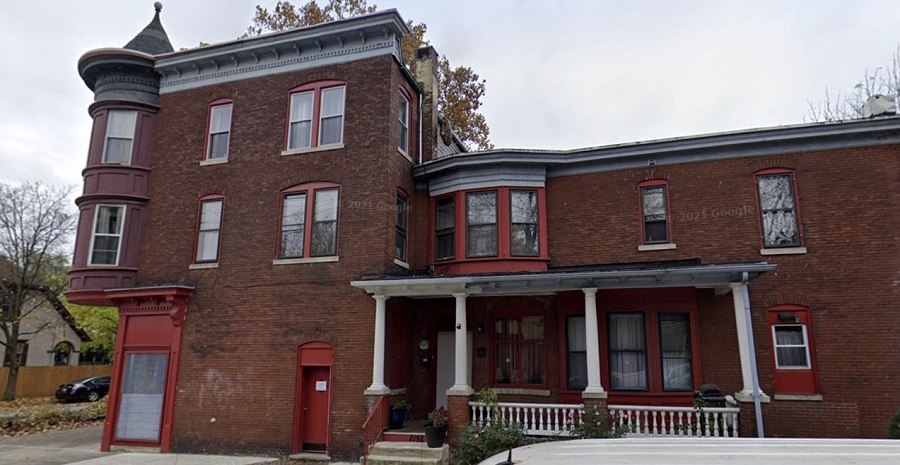
Home Josh Barker purchased in Uptown, Harrisburg PA for $50K.

Five years ago, Josh Barker decided to relocate to Harrisburg, bringing his experiences from New York City in a toolbox brimming with implements of community development. In a recent conversation with Josh, he mentioned how much Harrisburg reminded him of his early days in East New York,

“I’ve been boots on the ground since I’ve gotten here.  There are areas with heavy crime, lots of drugs, and baggage.  The people in those circumstances don’t expect a way out.  Rather than tell them how, I’d like to show them.”

Harrisburg’s crime rate is certainly worrisome – as reported by city-data.com, the crime rate in Harrisburg is 1.5 times greater than the U.S. Average per capita, higher than 92.3% of U.S. cities. However, for Josh, this is hardly a new predicament. As any good community builder knows, you must start with a foundation.  Josh has done that with no hesitation since moving to Harrisburg.

To start his foundation in Harrisburg, Josh found a home for his family in Uptown Harrisburg, which needed work and wasn’t the most desirable area in Harrisburg, but he saw the vision of what it could be. Besides, he was able to pay just $50,000 for the home, which was a far cry from the $700,000 price tag that it would have cost him to purchase the building in East New York that housed his barbershop. This is part of the value that he saw in Harrisburg. He renovated the home himself, with help from a few friends from Brooklyn, and now the home is worth 3 times what he paid for it. Where others saw a house that was in disrepair, Josh saw a house that could be turned into a gem, in a neighborhood that is sure to improve.

Since being in Harrisburg Josh has earned his contractor’s license and built a strong relationship with Pastor Joshua Robertson of The Rock Church in Allison Hill.  More than anything, Josh understands that the relationship building aspect of what he does is most important – change cannot happen without having the trust of the right people.  As that trust has grown, so has his impact;

“We’ve (The Rock Church) opened a learning center for children in the area, within the church.   We are currently trying to purchase space so that our impact can grow.   I’m also a part of an investment group, which purchased an empty lot that we’re looking to develop into quality affordable housing, which is much needed in the area.”

Understanding Josh’s history in East New York should provide a beacon of hope for the people of Harrisburg.  We know that our city has its issues with crime, drugs, and poverty that are reminiscent, but the potential of this place is enormous, and with the proper support, the impact Josh can impart is limitless.

Oh, and remember young Avery Jones from the barbershop days?  Avery grew up with a name you might be familiar with, and recently became Harrisburg’s newest small business and property owner: independent hip-hop icon Kota the Friend.  It was the recommendation of an old friend, Josh Barker that prompted Kota to purchase property in Midtown, Harrisburg on Reily Street, develop a storefront there for his fltbys streetwear brand, and host his Flight Night music festival in this city.

Josh Barker has a vision to be a part of the revitalization of Harrisburg.  He’s approached it with experience, compassion, and hard work.  His efforts have now attracted others like Kota the Friend to view Harrisburg as a home away from home.  The changes necessary to paint a brighter future for ALL people in Harrisburg won’t come easily but the groundwork is in place to make Josh’s dream a reality.

Continue reading

EducationHealth

The NYC Young Men’s Initiative Shows Improved Outcome Rates In Updated Disparity Report But More Work is Needed

In 2016, the Center for Innovation through Data Intelligence (CIDI) and New York City’s Young Men’s Initiative (YMI) produced the Disparity Report, inspired by, and built from, a series of previous collaborative data reports examining outcomes for young men of color. The Disparity Report originally emerged as a way to visualize city-wide trends in disparities in the context of the work of YMI.   At that time, CIDI realized the report can and should be a lens through which to describe racial disparities among young men as well as young women in four areas: Education, Economic Security, Health and Well-Being, and Youth Justice. There was no existing resource specifically integrating racial disparity data about all young New Yorkers and their interactions across NYC agencies into one tool for government agencies and community partners to use, especially one that was designed to make the data accessible.

CIDI and YMI released an update to the disparity report in October of 2021. Over the intervening five years, there was an increased awareness and a generally accepted understanding, especially among NYC social policy makers, that implicit bias in individuals and structural barriers in institutions create and sustain racial disparities. The COVID-19 pandemic helped solidify this emerging consensus in NYC. As such, the 2021 Disparity Report Update serves as a timely update to the first report and includes a summary of New York City policy initiatives aimed at addressing racial disparities.

Indicators were strategically selected in the domains of Education, Economic Security, Health and Wellbeing, and Youth Justice. CIDI used a standard method for comparing the data across groups and time and measuring the racial disparities. This method involved calculating the rate of an event for young men and women of color compared with White young men and women, respectively. Indicators consist of two parts:

  1. Outcome Rates (e.g., teen pregnancy, high school graduation, college/career readiness) by population.
  2. Comparison Index (Disparity measurement) between White individuals and individuals of other racial groups (Black, Hispanic, Asian).

The 2021 Disparity Report Update maintains a singular focus on racial equity. All indicators are disaggregated by racial/ethnic group (White, Black, Hispanic, and Asian) and by gender. This purposeful approach stresses the significant consequences of structural racism and discrimination that are often missed in aggregated measures of progress.

Though the indicators are mostly the same as the original Disparity Report, the data are new. Most indicators now have outcome data from 2013 up to 2020, though for some the most recent data available are from 2018 or 2019. The methodology is also revised and more appropriate, especially in regards to the calculation of racial disparity. The disparity measured in the 2016 report calculated the difference in outcomes for young people by race/ethnicity compared to White youth. In this update, instead of using White as a reference point for comparison, the reference point is now all other groups. As an example, when looking at the outcomes for Black youth in a given indicator, the comparison group is for non-Black youth in this report rather than White youth in the original report.

New to the updated report are Policy Change Highlights, examples of programs and policies designed to lessen racial disparities that have succeeded in making NYC a better place for young people.

Findings

The 2021 Disparity Report Update found improved outcome rates in virtually every indicator across each racial/ethnic/gender group in the latest data when compared to outcome rates in 2013. Many improvements were steady and substantial, and some were stunning. These improvements, however, did not lead to reductions in disparities between different racial/ethnic groups on most of the 28 indicators. On only three indicators (English Language Arts and math test scores and youth mortality) did disparities as measured by the comparison index markedly decline. Black youth, and to a lesser extent Hispanic youth, experience persistent and large disparities in outcomes.

This warrants more in-depth exploration into the underlying factors that are allowing some disparities to shrink while others remain.


Continue reading