Education

NYC Schools Preparing to Go to Full Remote Learning. Are They Ready?

Christina Veiga, Chalkbeat New York

Amid a steady upward climb in coronavirus cases, Mayor Bill de Blasio is sticking to the strict standard he has set for closing school buildings across the country’s largest school system.

Schools would close the day after the citywide positivity rate hits 3%, based on a seven-day average, the mayor said Thursday. That day appears imminent: The city’s average positivity has climbed to 2.6%, even as COVID-19 rates in schools have remained low. Random testing on campuses has shown just 0.18% positivity out of almost 112,000 tests conducted among students and staff.

There could be time to avoid school closures, the mayor said, urging people to double down on wearing masks and social distancing measures.

“There’s still a chance to do something to avert that,” de Blasio said. “And that’s why it’s so urgent that everyone does what we’re calling upon them to do, to help protect our schools.”

Currently, all students have the option of returning to school buildings, though social distancing requirements mean that most can only attend school between one and three days a week. But far fewer students than expected have gone back to classrooms. Out of roughly 1 million students enrolled in public schools, only about 280,000 have attended in-person classes at least once since the start of the school year.

Much remains up in the air about how another citywide shutdown would happen or what it would take to reopen school buildings. United Federation of Teachers President Michael Mulgrew said he would want to see the city’s positivity rate decrease for seven days and dip below 3% before returning to classrooms.

Here’s what we know about the city’s plans and what’s still being figured out.

The city isn’t planning to budge on its threshold for closing down school buildings. 

The city established its criteria for closures this summer. New York City was not far removed from the trauma of the spring, when the city became the world’s epicenter of infections and deaths. De Blasio faced intense backlash to his plans to reopen the school system, with parents skeptical that their children would be kept safe and the teachers union threatening a strike.

The strict threshold for closing, along with a random COVID-19 testing program in schools, was largely seen as a way to convince families and teachers to return to buildings. Standing by it, de Blasio said, was “about keeping faith with everyone in all school communities.”

“We put a standard out to say to everyone, ‘We’ll have your back. We’re going to do this in a very rigorous fashion.’ We need to stick to that standard,” de Blasio said.

The mayor has championed opening the school system, arguing that in-person instruction can’t be matched by remote learning and that the city’s most vulnerable students and families rely on schools for care and meals.

Some elected officials, along with candidates who are running to replace the mayor in the next election, said the city should keep buildings open, citing increased testing capabilities and low transmission inside schools.

The city’s 3% threshold is far more conservative than the state, which allows schools to remain open so long as positivity rates stay below 9%. Whether New York City’s charter, private, and parochial schools would have to adhere to city rules or state ones remains a question that the mayor could not answer.

The World Health Organization, meanwhile, has recommended more general closures until cases dip below 5% for a 14-day period.

Anna Bershteyn, an assistant professor of population health at the NYU Grossman School of Medicine did not comment specifically on the city’s threshold for school closures but said that “acting early is a good strategy.” Doing so could shorten the length of any lockdowns, she said.

“The data show NYC clearly in a second wave. New restrictions are inevitable,” she wrote in an email. “A good threshold is one that unmistakably signals that a second wave is coming, but that isn’t so high that it comes too late.”

Other countries fending off a resurgence of the virus have kept schools open while shutting down other parts of society, such as office buildings and restaurants. On Wednesday, Gov. Andrew Cuomo imposed a curfew on some types of businesses, but some indoor dining is still allowed in New York City, and de Blasio said it would be up to the state to roll that back.

It remains to be seen if Cuomo will try to intervene in any school closures. He and the mayor have clashed on school decisions throughout the course of the pandemic, creating a confusing tangle of information for parents and educators.

If and when schools do reopen, things could look different.

How to open buildings has been a point of contention. Many parents, advocates, and elected officials spent the summer lobbying city leaders to prioritize in-person instruction for the youngest students and those most at risk for falling behind, including students with disabilities, those who are learning English as a new language, and those in temporary housing.

De Blasio suggested on Thursday that he would work with community leaders to craft the next set of reopening criteria, now that more is known about the role of schools and children in transmission, and how many families feel comfortable returning to classrooms. At least 54% of students opted to learn exclusively from home, with Black, Latino, and Asian students choosing to do so at higher rates than white students.

“Now we have a lot more information about what’s actually happening in the schools — a lot of valid questions, like what it might mean for younger kids versus older kids,” de Blasio said. “We’re going to work through and talk to all the stakeholders about what the comeback strategy would look like and how quickly we could achieve it.”

Many of the city’s large high schools are currently largely empty, according to Brooklyn Councilman Mark Treyger. The city shouldn’t wait to see if the virus continues to spread, but should start retooling its hybrid model now using the space available, he said.

“I want to build a system that prioritizes our most vulnerable kids who need in-person services,” Treyger said. “And that includes our younger students, students with special needs, multi-language learners, students in temporary housing.”

The city remained mum on child care for essential workers.

A systemwide school closure is likely to put essential workers — like grocery store clerks, sanitation crews, police, and medical professionals — in a deeper child care bind. The city is working on plans to support those families, but the mayor had nothing concrete to share.

“We do have to figure out how we’re going to support essential workers in that situation. We’ll come back with more on that quickly,” de Blasio said.

Providing child care to essential workers was a major sticking point in the spring, before the pandemic first forced school buildings to shut down. The city quickly opened up emergency child care centers for thousands of students.

The city’s plans to provide child care to fill the gaps left by the blended learning model have been slow moving. Leaning on community organizations to make room, officials have aimed to open 100,000 spots for students on the days they’re not in school buildings through a program called Learning Bridges. As of mid October, the city was still 80,000 seats short. A spokesman for the city said that more than 34,600 offers have been made to families who have applied for seats in the program, but did not say how many have accepted a spot.

Are we ready for another shutdown? 

Gaping holes remain when it comes to access to the internet and devices to be able to log into remote learning. City officials are scrambling to equip homeless shelters with Wi-Fi, a project that won’t be completed until this summer. The city is also still distributing tens of thousands of devices that schools and students have requested.

Many New York City principals expected another citywide shutdown and planned this summer for such a possibility. One way is by having students in school buildings, who are logging into computers to watch lessons that teachers deliver remotely — meaning that their courses will change little if the city goes fully remote.

But there seems to have been little attention paid across the school system on how to improve remote learning, and many educators say they’ve been teaching themselves best practices and how to use a variety of tech platforms.

Mulgrew, the teachers union president, said there have been improvements in remote learning — but largely because of work happening at the school-level.

“I’ve been very vocal and critical of the department of education instructional people that they should have been doing a lot more,” Mulgrew said. “I don’t know why we have all these people who work in central, if it seems like they just tell schools to figure it out on their own.”

Still, the mayor said he was confident that schools and teachers are ready to make an abrupt shift to fully virtual learning, if needed.

“We’re already in a situation where principals and teachers knew that we could teach every child remote at any point, if we had to — literally the next day,” de Blasio said. “Everyone is being alerted to prepare for something.”

Chalkbeat is a nonprofit news site covering educational change in public schools.

Continue reading

EducationFeatures

Meet East New York’s Youngest CEO Live on VOICES of East New York with Nikki Lucas Sunday Nov 15 at 9am

This Sunday Nov 15, 2020 @9am on VOICES of East New York with Nikki Lucas, you can meet East New York’s youngest CEO, who sells his JFlex eyewear in a boutique shop next to the Gateway mall.

Jabez Robinson, CEO of JFlex EyeWear, and his mother, Dana Burnett will be guests on the weekly livestream video series, VOICES of East New York with Nikki Lucas, discussing entrepreneurship and the history behind JFlex Eyewear.

Dana Burnett, a mother of 4, is an entrepreneur, Brooklyn native, ENY resident for 26 years, Domestic Violence Survivor/Advocate, Poet, Playwright, Spoken Word Artist, HIV/AIDS Community Activist, Mental Health Case Manager at a local Hospital in Brooklyn, Christian and 20 plus years member of the Brown Memorial Baptist Church in Fort Greene/Clinton Hill Brooklyn. She also works with Jabez in managing the JFlex Eyewear Boutique.

For parents with children who have the entrepreneurial spirit, you will be able to ask Dana Burnett about the process and experience of having a child who is an entrepreneur.

Young aspiring entrepreneurs can ask Jabez about his experience being an entrepreneur and what it takes to run your own business at such a young age.

JFlex Eyewear is sold inside of the Gateway Pharmacy just outside of the entrance of the Gateway Mall.

You can join the livestream discussion Sunday November 15, 2020 @9am at Facebook.com/EastNewYorkNews.  If you do not have Facebook you can watch the show live on the homepage of EastNewYork.com

Continue reading

EducationHealth

Three Ways to Keep Students Motivated During the Pandemic

Content Powered by RiseUp ENY

Whether you are attending school remotely, attending in-person instruction, or a hybrid of both, it may be difficult to stay encouraged considering this new normal. And, with winter promising earlier evenings and chillier days, it may only get more challenging. Here are a few tips to keep you motivated:

1) Create a routine


It’s important to stick to a routine so that school doesn’t overwhelm your entire day. Don’t know where to start? Your morning routine could look like:

  • Setting a morning alarm;
  • Getting dressed for the day,
  • Eating a balanced breakfast, and
  • Getting to class on time.

Also, decide how much time you’d like to dedicate to schoolwork outside of the classroom—for studying, reviewing notes, or completing assignments. Make sure to build in some time for lunch, breaks, and after school rest.

Creating this structure will allow you to feel some control over your day.

Lastly, here is a quick bonus tip: use a whiteboard or a day planner to help you stay organized.

 2) Set small goals and reward yourself

Set a small goal to look forward to completing each day. Your goal can be as simple as:

  • Sleeping a full eight hours at night;
  • Attending class on time;
  • Participating in your teacher’s office hours for extra help; or
  • Practicing a tough lesson and more.

You may want to set goals that contribute towards larger tasks or projects. For example, reading a few chapters a night in preparation to complete your book report may alleviate some anxiety.

Once you’ve completed this goal, don’t forget to reward yourself! Rewards might be a Zoom call with a friend, a healthy snack, watching a video on YouTube, or playing video games for a half hour.

Accomplishing a small goal feels terrific and will uplift your mood and motivate you to tackle bigger tasks.

3) Eat balanced meals and stay active


How you eat can affect your mood and productivity. If you aren’t eating enough or aren’t eating the right things, your brain will have a hard time staying focused. Processed, prepackaged foods like soda, candy, or cereals high in fats and sugar are quickly broken down. This type of energy is used up by your body fast. As a result, you may feel tired and sluggish after eating processed foods.

So, make sure to include the following food groups into your meals each day to gain long-term energy:

  • Leafy green vegetables like spinach or kale;
  • Your favorite fruits (this could be apples, bananas, grapes, or even berries);
  • Proteins like eggs, yogurt, or fish; and
  • Grains like oatmeal or brown rice.

To make your day run even smoother, try to prepare meals and healthy snacks ahead of time.

Lastly, don’t forget to engage in some fun physical activity. You can go for a walk, follow an online workout video, or dance to your favorite songs for quick and easy ways to stay active.

During this unique time, you can expect dips in motivation and productivity. While the tips above can help you stay on task, remember that it’s okay to take some time off to relax. With consistency and mindfulness, you’ll be able to overcome some of the stress associated with the many changes facing the world today. Be patient with yourself, and push forward!

For more information or additional resources, visit https://www.cccnewyork.org/covid-19-resources/

This Content Powered by RiseUp ENY

Continue reading

Health

Is Your Child Overweight? Here’s Help

Health Content Powered by RiseUpENY

Childhood obesity is an epidemic in the U.S. These tips can help kids stay healthier.

Overeating, lack of exercise and unhealthy diets are creating an obesity epidemic in children and teenagers across the nation. Obesity now affects more than 18% of U.S. children and teenagers, according to the Centers for Disease Control and Prevention.

Why Childhood Obesity Is a Problem

Low self-esteem and bullying issues aren’t the only potential consequences of kids being overweight. Children and teenagers who are overweight or obese are more likely to develop high blood pressure, high cholesterol, sleep apnea, cancer, diabetes and heart disease as they age.

A research study conducted by the Murdoch Children’s Research Institute illustrates the devastating impact obesity can have on children’s lives. The study followed 1,811 children from the first years of life until they were 11 or 12. Children who were overweight as toddlers had stiffer arteries, thicker arterial linings and a higher risk of developing metabolic syndrome.

Metabolic syndrome occurs if you have high blood pressure, abnormal cholesterol, high triglyceride levels and excess fat around the waist. People who have the syndrome are more likely to suffer heart disease, stroke and type 2 diabetes.

How Parents Can Help Children Avoid Obesity

As a parent, you strive to keep your kids as healthy as you can. Helping them avoid obesity can go a long way in meeting that goal. Here are a few ways to get kids on track to achieve and maintain a healthier weight:

Make regular exercise a priority:

The American Academy of Pediatrics recommend 30 minutes of interactive play time daily for babies, three hours of physical activity for children 3 to 5, and one hour of moderate to vigorous activity for children 6 and older most days of the week. Sports and organized activities aren’t the only ways to keep kids active. Your children can meet activity recommendations by playing games in the backyard, running through a homemade obstacle course or taking family walks and bike rides.

Limit screen time:

Given the choice, many kids would rather spend their free time playing digital games, texting with friends or watching the latest TikTok videos than participating in more active hobbies. Although your children may need their digital devices for schoolwork and socializing, taking a break for an hour or two every day certainly won’t harm their relationships or prevent them from completing homework.

Offer healthy meals and snacks:

Eating sugary foods and beverages, high-carbohydrate snacks and fried foods can cause weight gain whether you’re a child or an adult. Whole grain pasta and bread, fruits, vegetables, unsaturated fats, low-fat dairy products, and poultry, fish and lean meats are much better choices. Does your son or daughter have a sweet tooth? Make treats healthier by following the Mayo Clinic’s recommendation to reduce sugar in baked goods by 1/2 to 1/3 – you often can’t even taste the difference.

Model portion sizes:

It’s easy to eat too much when you overestimate portion sizes. For example, 1/2 of a bagel, 1 cup of dry cereal, 1 slice of bread or 1 teaspoon of salad dressing all equal one serving. You can find additional serving sizes on the American Academy of Nutrition and Dietetics’ website.

Involve kids in meal prep:

Your kids may take more interest in healthy eating if they help you plan and prepare meals. You’ll find plenty of recipes online that are tasty, nutritious and kid-approved.

Concerned about your child’s weight? Making these lifestyle changes can help keep your children – and the whole family – healthier.

Copyright 2020 © Baldwin Publishing, Inc. All rights reserved.  Health eCooking® is a registered trademark of Baldwin Publishing, Inc. Cook eKitchen™ is a designated trademark of Baldwin Publishing, Inc. Any duplication or distribution of the information contained herein without the express approval of Baldwin Publishing, Inc. is strictly prohibited

Continue reading

Features

East New York Restaurant Owner Using Innovative Marketing To Stay Afloat During the Pandemic

by Kayla Fuentes

After being forced to shut their doors in March this year, the life of small businesses was in the hands of owners themselves to figure out how to stay afloat while everything around them seemingly sank. Such a sudden change was bound to cause hardship in the lives of these business owners, but, with no other option thousands around the globe, and locally, had to figure out how they would make it past the dark days.

New York City was hit hard by the pandemic, to say the least, and virtually no one was prepared. Andrew Walcott, owner of Fusion East Restaurant, had to put on his thinking cap and efficiently devise a plan to help the community and his restaurant through such challenging days.

Fusion East Owner, Andrew Walcott delivering food to Brookdale Hospital Emergency Room staff

“During the pandemic,” he added, “we have pivoted to focus more on our food truck operations, take out, and catering”. As a change of business focus there was no room for failure. It was all about survival. One of the primary sources that kept the restaurant alive was the food truck strategically placed on the busy retail strip of Pitkin Avenue, located in Brownsville. The food truck allowed for safe service between customers and workers, as they lined up 6 feet away from where their food cooked.

Additionally, take out has boosted and completely shifted the restaurant’s main clientele from indoor dining to calls, take-outs, and the food truck. “we’ve dedicated more marketing and staff resources to build up a business line”, Walcott added.

With the stress of healthcare workers at an all time high, Fusion East stepped in, and showed off their new food truck by providing thousands of catered meals to first responders, police officers, and hospital workers. And with the help of radio, social media, content marketing and television, Walcott has shed even more light to his business and attributes this innovative marketing as the key to surviving the pandemic.

It’s safe to say that in the midst of it all, these were changes the restaurant wouldn’t have had to endure if the pandemic did not take its course this spring, and the rapid lockdown restrictions were certainly tough to keep up with. But, with the goal being to always be there for the community of East New York, Walcott stays determined to work hard through just about anything.

Walcott also mentioned that his restaurant will be part of the One Brooklyn Jazz Festival in December, which will include live jazz trios for indoor dining customers to enjoy, and the performances will be livestreamed to reach all of his customers.

Stay tuned for updates on the live jazz performances.

Continue reading

Health

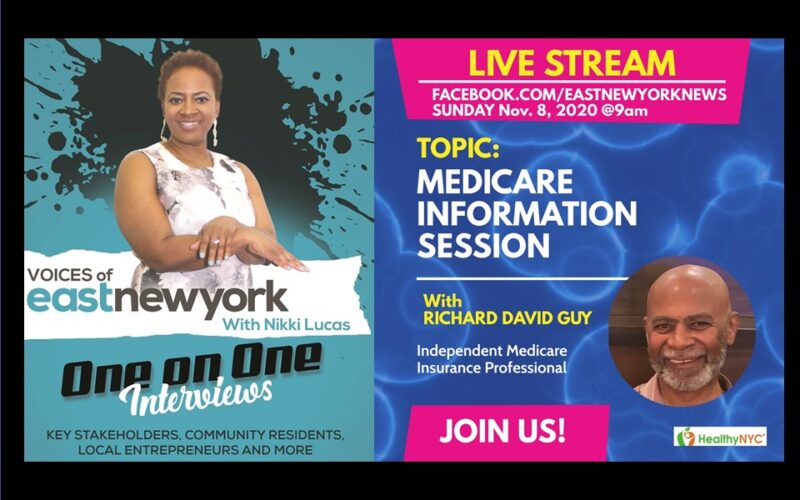
Virtual Medicare Information Session Sunday Nov 8 at 9am Open To Anyone With Medicare Questions

Join this important Virtual Medicare Information Session with Medicare Insurance expert Richard David Guy. You will be able to ask questions and receive information about Medicare and Medicare Supplement Insurance. This is a special Health Care segment of VOICES of East New York with Nikki Lucas, just in time for Open Enrollment.

You can Watch and Join Live at Facebook.com/EastNewYorkNews.  If you do not have Facebook you can watch the show live on the homepage of EastNewYork.com.

Watch Past Episodes of VOICES of East New York with Nikki Lucas. Guests have included Congressman Hakeem Jeffries. Senator Roxanne Persaud, Senator Julia Salazar, Hip Hop Artist KOTA the Friend, Brooklyn DA Eric Gonzalez, and a lot more.

Continue reading

Housing

214 Nehemiah Spring Creek Apartments With Rents Ranging from $471 to $2,096 Per Mth Now Open for Lottery

The Housing Lottery is now open for Nehemiah Spring Creek apartments next to the Gateway Mall. There are 214 rental apartments, including studio to 3 bedroom units.

The 214 newly constructed units are located at:

  • 389-402, 498-504, *516 SCHROEDERS AVENUE
  • 127 AND 129 GATEWAY DRIVE
  • 1111-1123 LOWER ASHFORD DRIVE;
  • *All Units in 516 Schroeders Avenue are designated for applicants whose households at the time of application include at least one person aged 62 or older.

Eligible Income: $18,618 – $126,900

Household Size: 1 – 7

A percentage of units are set aside for:

5% for Mobility
2% for Vision/Hearing

Rents: $471 – $2,096

Preference for a percentage of units goes to:

37% for 62+
50% for Community Board Member
5% for NYC Employee

Deadline: Applications must be postmarked or submitted online no later than December 31, 2020.

Application. Income Requirements and Details Here

Subscribe to East New York News for updates on housing, politics, new development, health, entertainment, dining and more

Continue reading

Housing

Here’s The Application for the New Fountain Seaview Apartments in East New York Next To Gateway Mall

THE APPLICATION

The Fountain Seaview applications are available and can be printed through the link below. The application is simple and must be mailed directly to the owners of the development. The mailing address is in the link below as well. The owners state in their Cover Letter that “Applications are selected randomly through a lottery. Depending on the volume of applications received, it may not be possible for all of them to be processed.”

DEADLINE

The application must be postmarked on or before December 28, 2020.

INCOME REQUIREMENTS

GET THE APPLICATION

Fountain Seaview B6 Application


Continue reading

EducationPolitics

NYC Comptroller Scott Stringer Proposes Free Tuition at all CUNY Community Colleges and Overhaul of New York City’s Workforce Development Strategy

New York City Comptroller Scott M. Stringer unveiled a comprehensive overhaul of workforce development in New York City, including making CUNY community colleges free for all to build a more competitive and inclusive post-pandemic economy and to better align training with the jobs of tomorrow. With COVID-19 displacing hundreds of thousands of workers and rapidly accelerating long-standing trends in e-commerce, telework, digitization, and automation, Comptroller Stringer’s plan calls for the City and State to dramatically expand the scale, quality, accessibility, and affordability of education and job training programs. Comptroller Stringer outlined a series of proposals to upskill millions of New Yorkers, dramatically diversify high-wage industries, and generate career opportunities during the current economic crisis and beyond to spur New York City’s recovery.

“CUNY is essential to any workforce development strategy in New York City—which means it is vital to our City’s economic recovery. The pandemic exposed inequities in our economy and worsened the longstanding gaps in our social safety net. While some sectors of our workforce have the tools, resources and career flexibility to work remotely, many New York City jobs and careers have been derailed and debilitated by the economic shutdown. As we work to recover and rebuild, we must address these gaps and ensure that New York City’s workforce is strong and ready to take on the opportunities and challenges of the post-COVID, 21st century global economy,” said New York City Comptroller Scott M. Stringer. “My plan overhauls and modernizes our approach to job training, job placement, and education to reflect the evolution of work and aims to break down systemic barriers that have historically excluded women, people of color, immigrants and young people from higher-wage industries. As we emerge from this economic crisis, we need to work with CUNY and other engines of economic mobility to build a pipeline of opportunity for the next generation and live up to a promise that anyone can make it in New York City.”

Comptroller Stringer’s plan focused on the need to expand employment opportunities in healthcare, logistics, engineering, finance, design, early education, analytics, cyber-security, software development, and other occupations and professional services that have largely withstood the economic shock of the pandemic endured by the service-oriented, lower-wage sectors. The plan centers on the City University of New York, the largest urban university system in the nation and uniquely positioned to educate and upskill first-generation, working, part-time, low-income, and adult learners and serve as an engine of economic mobility in the five boroughs. In the months and years ahead, CUNY must be ready, resourced, and empowered to better prepare displaced workers, part-time learners, disconnected youth, first-generation students and mid-career learners to compete in a post-pandemic economy. It must also forge stronger partnerships with the DOE, community-based organizations, and private employers and offer, for the first time in decades, free tuition for all residents at its community colleges. Finally, it must be well-staffed with committed, full-time teachers and refrain from leaning on part-time adjuncts.

In sharp contrast to past New York City recessions, where employment in the professional services industries plummeted while low-wage, shift-work jobs held steady, it is communities of color and low-wage workers that have bore the brunt of this pandemic and its myriad impacts. Since the end of 2019, the private sector has shed 479,000 jobs and the restaurant, retail, accommodations, building, and personal services industries have lost a disturbing 253,000 jobs — many of which may be permanently eliminated amidst store closures and the rise of e-commerce, automation, and telework. Helping displaced workers in these industries — of whom 74 percent are Black, indigenous and people of color (BIPOC); 73 percent live in the non-Manhattan boroughs; 54 percent are foreign-born, and 16 percent are under the age of 25 — and all New Yorkers gain access to education, training, and jobs has never been more vital.

With BIPOC and non-Manhattan New Yorkers disproportionately concentrated in the low-wage service sector, the unemployment rate for Asian (18.2 percent), Hispanic (16.7 percent), and 16-24 year olds (24.3 percent) in New York City is far higher than the city-wide rate (15.7 percent) and that of white New Yorkers (14.2 percent). The rate for Bronx (21.1 percent), Brooklyn (16.5 percent), Queens (16.4 percent), and Staten Island (13.8 percent) residents, meanwhile, significantly outpaces unemployment among Manhattanites (12.9 percent).

To address these devastating inequities and support communities across the five boroughs, Comptroller Stringer outlined the following steps for a comprehensive workforce program for New York City:

The State should make CUNY community colleges tuition-free and the City should guarantee universal access to CUNY ASAP for all community college students

  • The New York State tuition-free Excelsior Program serves less than 2 percent of CUNY students. It should be expanded to meet the needs of part-time, working, low-income, and adult learners.
  • CUNY ASAP, which provides financial assistance for books and transportation as well as structured academic supports like tutoring and personalized academic advisory, should be expanded to all full-time community college students.
  • CUNY should hire 50 “college navigators” to help advise adult learners who have been away from higher education for several years. These navigators will provide specialized supports, helping adult learners overcome the logistical, financial, and academic barriers to earn their desired credential or degree.
  • CUNY must invest in experienced, full-time faculty. For years, CUNY has increasingly relied on part-time staffers to fill a broad range of positions — from classroom professors and librarians, to lab technicians and administrative support staff. Indeed, part-time adjuncts now comprise more than 50% of CUNY’s teaching staff. The combination of low salary and the time spent traveling from one campus to another means that part-time faculty are frequently less able than full-time faculty to invest the time necessary to fully develop the academic and workplace potential of students.

Build Out a Universal, Paid Internship Program for CUNY Students

  • Only 21 percent of CUNY students participated in an internship in 2019 and only 12 percent were in a paid internship.
  • The City and CUNY should work with private sector employers to build out a universal, guaranteed paid internship program for all students entering their final year of study. This program will double down on CUNY’s extraordinary record as an engine for economic mobility.
  • CUNY must build out its campus Career Engagement and Development Centers and upgrade its online tools to help students find paid work that aligns with their studies.

Expand Career and Technical Education, Early-College, and College Now in our Public Schools

  • The City must continue to invest in Career and Technical Education (CTE) and ensure that these schools and programs meet rigorous standards for industry-aligned curriculum, teacher certification, work-based learning, and job-placement. A focus on IT, STEM, and other high-paying fields is essential.
  • The State must work to streamline its byzantine CTE approval process, which can take well over five years to complete.
  • CUNY and the DOE should expand the number of early-college high schools, a proven model for boosting high school graduation and college attendance. Over the next four years, they should be expanded to 34 schools, with at least one early college high school in each of New York City’s 32 community school districts.
  • DOE and CUNY should work together to expand College Now, which allows 22,000 students to take college credit courses while still enrolled in high school. They should aim to target 75,000 high school students by 2025, so that 75% of incoming freshmen will already have some college credit upon entering.

Create a CUNY Tech Corps to help small businesses adopt digital tools and develop an online presence

  • Small Business Services should partner with CUNY to launch an NYC Tech Corps, helping Main Street businesses develop a web presence, expand online sales, and implement digital payroll, sales, and inventory tools.
  • The Tech Corp would work directly with business owners to design websites, to help purchase business software, and to set up these tools. It would be staffed by recent CUNY graduates as well as interns majoring in tech, design, and business-related fields.

Align Private Industry and Workforce Training

  • In the months ahead, the City should work closely with business leaders to develop new job training programs and scale up existing ones; establish apprenticeship, paid-internship, and work-based learning programs; help CUNY and workforce development organizations keep their curriculums up-to-date; and develop new certificate programs in conjunction with CUNY’s Workforce Innovation Lab.
  • Private employers should play a more active role in retraining, upskilling, and diversifying their own workforce and refrain from leaning on contingent labor.
  • New York City employers should coordinate and aggregate their philanthropic support for the workforce development and educational field.
  • Corporate HR departments should review their job descriptions and degree requirements in order to better align with workforce nonprofit and community college credentials and to diversify their staffing.
  • Finance, legal, accounting, and tech firms that have relocated back-office operations to low-cost states and countries should bring these middle class jobs back to New York City.

Focus on Youth Unemployment and Out-of-School, Out-of-Work New Yorkers

  • The DOE and CUNY must work diligently to bring Out-of-School, Out-of-Work youth back into the education system and prevent high drop-out rates amidst remote learning.
  • The DOE must unlock the potential of Transfer Schools to support older immigrant youth. As part of this effort, the City should expand its Internationals Network, transfer schools that integrate language development along with project-based and work-based learning.
  • The City should work closely with private employers to expand youth apprenticeships and subsidized, transitional employment opportunities.
  • The City should invest in institutional partnerships between CUNY and CBOs. The CUNY Network for College Success, for instance, aims to significantly increase college persistence and graduation rates by helping CBOs develop and improve their college readiness workshops, career guidance, financial aid counseling, and assistance with transfers and re-enrollment. It should be expanded throughout the five boroughs.

Build Out Subsidized Wage Programs for Targeted Populations and Expand Certified Apprenticeships

  • The City should expand its successful transitional employment programs, offering subsidized, living-wage employment to New Yorkers in homeless shelters, out-of-school-out-of-work youth, those exiting Rikers, and other populations in need.
  • The City should expand and restructure its modest Apprenticeship NYC program, building a public-private partnership to introduce more Registered Apprenticeship and Pre-Apprenticeship programs in healthcare, analytics, finance, logistics, and design. These programs should be focused on diversifying those fields and increasing economic mobility for those without a college degree.

New York State Should Overhaul its Shared Work Program to Help Businesses Rehire and Retain Staff

  • The State’s Shared Work program is an effective tool for countering recessions, helping businesses retain staff, and rehiring workers. Unfortunately, it is severely underutilized.
  • To increase enrollment in its Shared Work program and help employers rehire workers, the New York State Department of Labor should improve outreach, marketing, and staffing, streamline enrollment and certification, leverage recent federal government subsidies, and adjust the hours that employers are allowed to cut and furlough.
  • Employers should be encouraged to switch their workers from unemployment insurance to Work Share so that they can begin to transition back to work.
  • New York State should use the Shared Work Program as an opportunity to connect furloughed employees to education, training, and upskilling programs.

Expand Bridge Programs that Pair Job Training with Language Education and Basic Skills Training

  • To better support the two million New Yorkers who lack literacy skills, English language proficiency, or a high school diploma, the City needs to better align job training with language education and basic skills training.
  • CUNY, with its robust network of community colleges, continuing education and certification programs, and English language and remedial education courses, has begun to build out a wide range of these “Bridge Programs” for those pursuing careers in a variety of industries and occupations. They should be dramatically expanded with support from the City.

Continue reading

EducationEvents

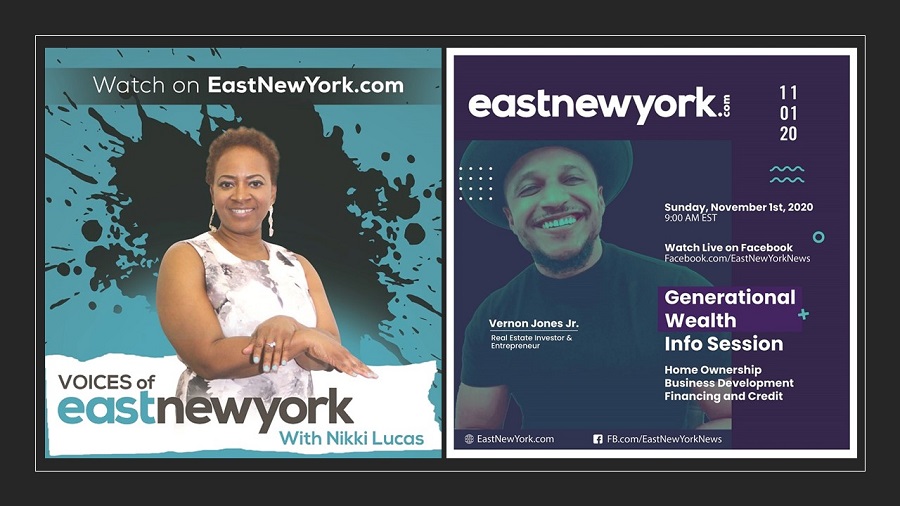
7 Principles of Generational Wealth Information Session with Guest Vernon Jones Jr on VOICES of East New York with Nikki Lucas

People throw around the term Generational Wealth, but many people do not know what it means.

Generational Wealth represents assets passed down from one generation to the next. If you can leave behind a notable inheritance to your descendants, that constitutes generational wealth. … People who inherit generational wealth have a significant financial advantage over those who do not.

This week on VOICES of East New Yok with Nikki Lucas, 33 year old entrepreneur, real estate investor, and owner of GenerationalWealth.org, Vernon Jones, Jr. will be talking about how and why he purchased a mixed use building in East New York. He will also explain the 7 Principles of Generational Wealth.

Generational Wealth can start with the current generation in your family. You do not have to be wealthy today to start the process of creating Generational Wealth for your family. It’s a process.  Tune in to this week’s show to learn more about the process and to join the discussion.

SUNDAY November 1, 2020 @9am

Watch and Join the Discussion on FB.com/EastNewYorkNews

You can also watch the show on the homepage of EastNewYork.com.


Continue reading